

What real money changes compared with a demo
A demo pokie and its paid version usually look identical. Same reels, same bonus round, same soundtrack. What changes is everything around the game. In demo mode nobody needs to know your name, no bank is involved and nothing you see on screen can be withdrawn. Once you deposit, you have entered a contract: the operator's terms now decide which games you may play, how much you may stake per spin while a bonus is active, and what paperwork stands between a balance and your bank account.
There is a second, quieter difference. The return setting of a game can vary between sites, because many studios supply the same title in several versions. A demo on a studio's own website may not match the version a particular casino runs for paying customers. The figure that counts is the one printed in the game's own help screen at the site where your money sits. Our guide to RTP and volatility explains how to read that screen.
So treat free play as a rules lesson, nothing more. It shows how a feature triggers and how fast a balance moves. It tells you nothing about how the operator behaves when you ask for your money back.
Where New Zealand law stands right now
For years the position was simple and slightly odd. The Gambling Act 2003 stopped anyone running online casino games from inside New Zealand, with TAB NZ and Lotto NZ as the authorised exceptions for betting and lottery products. It did not make it an offence for a person in New Zealand to play at a site based overseas. That is why Kiwis have long been able to deposit at offshore casinos, and why those casinos were never supervised by anyone here.
That is changing. The Online Casino Gambling Act 2026 sets up a licensing system run by the Department of Internal Affairs, with a limited number of licences, and operators without one are required to stop offering online casino gambling to New Zealanders from 1 December 2026. Licensed operators carry obligations offshore sites never had towards NZ players, including spending limits and restrictions on how you can pay.
What that means in practice: before you register anywhere, find out whether the operator holds, or has applied for, a New Zealand licence, and what it says will happen to NZ accounts after the deadline. A site that is silent on the question is telling you something. We keep the current position on our legal and compliance page, and the Department of Internal Affairs is the source to trust over any review site, this one included.
Five checks before you hand over an email address
Ten minutes of reading saves most of the grief people later describe in complaint forums. None of these checks needs an account.
- Who is the company? Scroll to the footer. You want a legal entity name, a registered address and a licence reference you can look up on the licensing body's own website. A logo is not a licence.
- Are New Zealand residents accepted? Open the terms and search for the list of restricted countries. Being able to load the site from Queenstown proves nothing.
- Is NZD a real account currency? Some sites show prices in dollars but hold your balance in another currency, and you pay the conversion both ways.
- What are the withdrawal rules? Look for the minimum withdrawal, any weekly or monthly ceiling, the stated processing time and the list of documents required.
- Can you set limits yourself? Deposit limits, loss limits and session reminders should be in the account menu, not something you have to email support for.
If any of the five cannot be answered from the site's own pages, treat that as the answer. Our article on the best NZ online casino goes further into judging an operator by how it pays out rather than by how it advertises.
Getting NZD in: POLi, cards and the rest
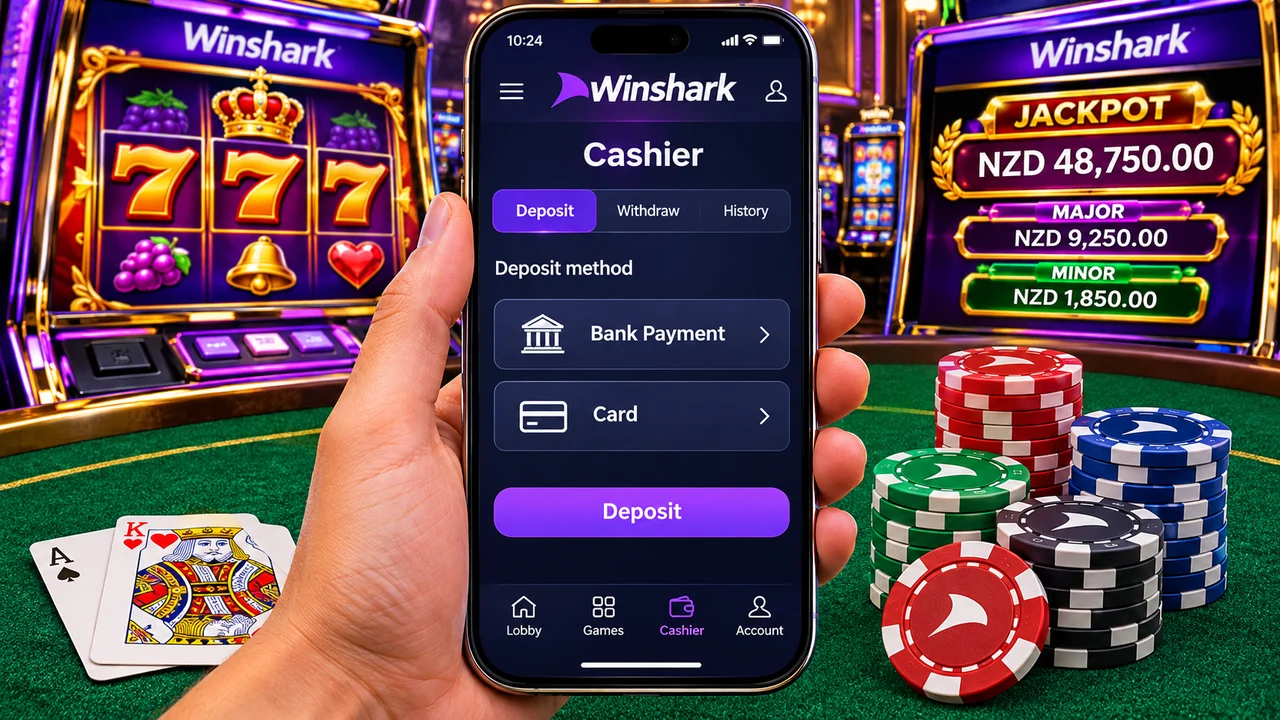
The deposit screen is where an NZ-facing site shows whether it was built for this market or merely translated for it. The methods below are the ones Kiwi players most often meet. Availability, minimums and fees differ from site to site, so read the cashier itself, logged in, before choosing.
| Method | How it works | Withdraw the same way? | Watch for |
|---|---|---|---|
| POLi | Pay-by-bank: you pick your bank and approve a payment from your own account | No, payouts normally go by bank transfer | Your bank's own stance on sharing internet banking logins |
| Debit card (Visa, Mastercard) | Card details entered in the cashier | Sometimes, depends on the site and card | Some NZ banks decline gambling payments; credit cards are barred for licensed operators |
| Bank transfer | Payment from your bank to the operator's account | Yes, the usual payout route | Slower to arrive; reference must be exact |
| E-wallet | You fund the wallet, then pay the casino from it | Usually yes | Wallet fees and bonus exclusions |
| Prepaid voucher | A code bought with cash or card | No | Deposit-only, so plan the payout route first |
Two practical points. First, most operators pay winnings back to the method you deposited with where that is technically possible, and to a bank account in your own name where it is not. So a deposit-only method such as POLi or a voucher means an extra verification step later: the site will want proof that the bank account receiving the payout is yours. Second, make the first deposit small. You are testing a cashier, not committing to a casino.
Which games suit which kind of evening
A lobby with thousands of titles is mostly noise. The useful question is what pace and what kind of swings you are comfortable with.
| Game | Pace | Your decisions matter? | Typical feel |
|---|---|---|---|
| Online pokies | Fast, a spin every few seconds | No, apart from stake and game choice | Long quiet spells, occasional feature |
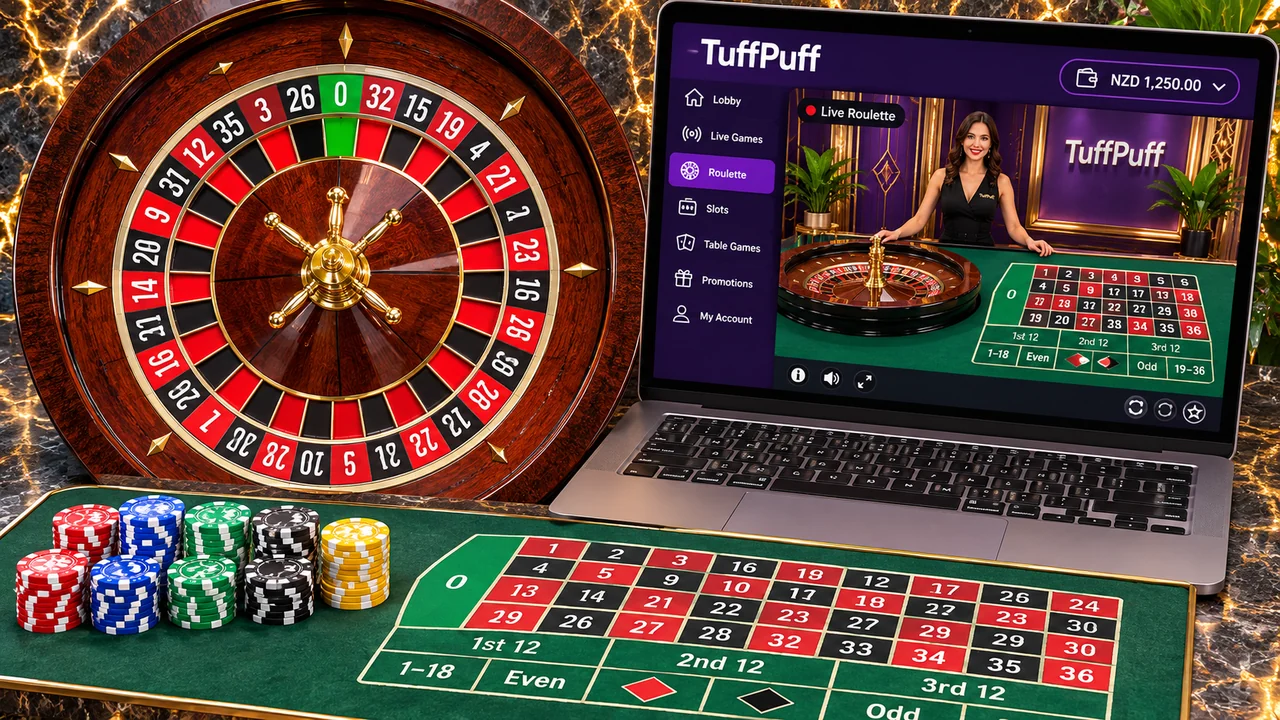
| Roulette | Medium | No, every bet on the same wheel carries the same edge | Steady, easy to follow |
| Blackjack | Medium | Yes, poor play costs noticeably more | Low swings if you follow basic strategy |
| Live dealer tables | Slow, set by the dealer | Depends on the game | Closest to a casino floor |
| Progressive jackpots | Fast | No | Part of each stake funds the prize pool |
Pokies
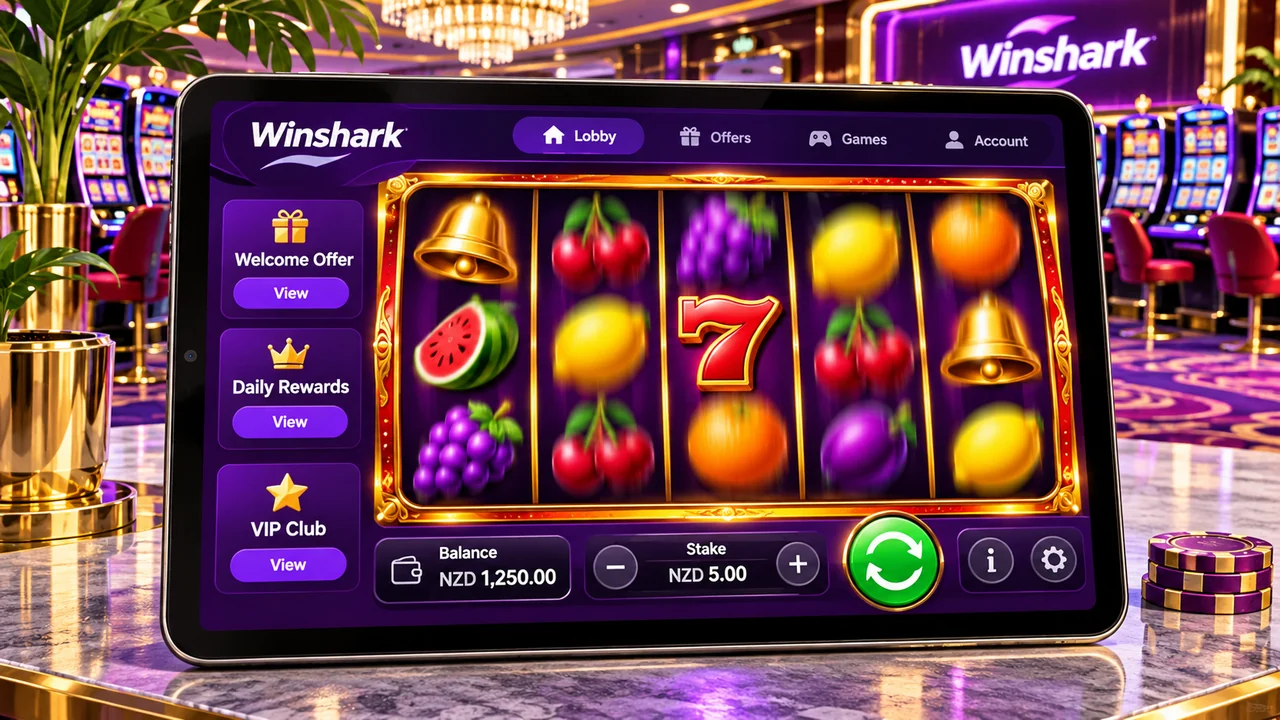
Pokies are the bulk of any online lobby and the simplest to start, which is also why they drain a balance fastest. Volatility matters more than theme. A low-volatility game pays small amounts often; a high-volatility game can swallow a hundred spins without a meaningful return and then pay in one burst, or not at all. If you have never read a paytable, open the game's information screen and work through it line by line before the first paid spin.
Roulette and blackjack
On a single-zero wheel the house keeps 1 number in 37, a touch under 2.7% of every bet over the long run. A wheel with two zeros keeps 2 in 38, nearly double. That is arithmetic, not opinion, and it is the easiest good decision in a casino: choose the single-zero table. Blackjack rewards anyone prepared to learn a basic strategy chart, and punishes hunches. The rules printed on the table, such as what a natural pays and when the dealer must stand, shift the edge more than most players realise.
Live tables
A studio dealer and a real wheel, streamed to your phone. Rounds take longer, which is no bad thing: fewer bets per hour means a slower average cost. Minimum stakes tend to sit higher than on the software versions.
What an hour really costs: a worked example
Players think in deposits. Casinos think in turnover, the total of every bet placed. The gap between those two views explains most surprises. The figures below are an illustration with round numbers, not a promise about any game.
Say you play a pokie whose help screen shows a return of 96%, at $1 a spin, and you get through 500 spins in an hour. Your turnover is $500, even if you only ever deposited $50, because wins are staked again. The long-run average cost of that hour is 4% of $500, which is $20.
| Stake per spin | Turnover | Average cost |
|---|---|---|
| $0.20 | $100 | $4 |
| $1 | $500 | $20 |
| $2.50 | $1,250 | $50 |
Two cautions. An average over millions of spins says little about one evening: on a volatile game you might finish well ahead or lose the lot in twenty minutes. And speed is the hidden multiplier. Turbo modes and quick-spin settings can double the number of bets in an hour, which doubles the average cost without your stake changing at all. Slowing down is the cheapest lever you have.
Bonuses: when to take one and when to skip it
A welcome bonus is a loan with conditions, not a gift. The usual condition is wagering: you must bet the bonus, or the bonus plus your deposit, a set number of times before anything linked to it can be withdrawn. Other conditions ride along: a maximum bet per spin, a list of excluded games, an expiry date and sometimes a ceiling on what can be cashed out.
Take a bonus if you were going to play that many spins anyway and the rules are ones you can follow without thinking. Skip it if you want to be able to withdraw at any moment, if you prefer table games that count little or nothing towards wagering, or if the terms run to pages you have not read. Most cashiers let you decline with a tick-box, and support can remove a bonus before you have staked it. Playing with your own money and no strings is a perfectly sensible choice.
Cashing out is the real test of a site
Every operator handling real money has to confirm who its customers are. Expect to be asked for photo ID, a recent proof of address and evidence that the payment method belongs to you, such as a bank statement showing your name and account number. This is standard practice, and it happens before the first payout at the latest.
The sensible move is to verify early. Upload documents straight after registering, while nothing is at stake, rather than after a win when every day of waiting feels personal. Check that the name on your account matches your ID letter for letter. Mismatched names and nicknames are a common cause of delays that feel like stalling.
A withdrawal usually passes through two stages: the operator's own approval, then the payment network. The first is the one that varies. If a site lets you cancel a pending withdrawal and play the money again, do not. That option exists because it works in the operator's favour.
A dry run: your first twenty minutes
The cheapest way to learn how a site behaves is to rehearse the whole cycle with an amount you would not notice losing. Think of it as a test drive in which the car is the cashier, not the game.
- Register with your legal name, exactly as it appears on your ID, and choose NZD as the currency.
- Open the account menu and set a deposit limit before paying anything in. Note how long the site makes you wait if you later want to raise it.
- Upload your ID and proof of address straight away and see how long approval takes.
- Make the smallest deposit the cashier allows with the method you plan to keep using. Decline the bonus this once, so nothing blocks a withdrawal.
- Play a few minutes at the lowest stake on a game whose help screen you have read.
- Request a withdrawal of whatever is left, if it meets the minimum, and time each stage: request, approval, arrival in your bank.
You now know things no review can tell you: whether support answers, whether verification is orderly, and whether money leaves as readily as it arrived. If the remaining balance sits below the minimum withdrawal, that is useful information too, because it shows how the two thresholds relate at this operator. Should any stage stall without a clear explanation, you have lost very little, and you have learned it before a larger sum was involved. Only after a clean dry run does it make sense to think about bigger deposits or a welcome offer.
Mistakes that cost first-timers the most
- Depositing before reading the withdrawal terms. The minimum withdrawal can be several times the minimum deposit.
- Opening a second account. Duplicate accounts in one household can void winnings under most terms.
- Breaking the maximum bet during a bonus. One oversized spin is enough for some operators to cancel bonus winnings.
- Using someone else's card. Payments must come from a method in your own name.
- Chasing. Raising stakes to recover a loss increases turnover, and average cost rises with it.
- Leaving a balance idle. Dormant accounts can attract fees after a period set out in the terms.
None of these is exotic. They are all written into the terms, and they are all easier to avoid on day one than to argue about later.
Online tonight, or the casino floor in Queenstown?
The two are different products that happen to share a vocabulary. A licensed New Zealand casino is a physical venue with an entry age of 20, staff on the floor and rules enforced on the spot. An online site is open all hours, takes stakes far smaller than a table minimum, and sits a tap away on the phone in your pocket, which is both its appeal and its risk.
If the evening is as much about the outing as the game, the venue wins. If you want twenty minutes of low-stake pokies without leaving the house, online does that better, provided the operator checks out. Our comparison of land-based and online pokies sets the two side by side, including the safeguards each one does and does not give you.
Either way, decide the amount and the finishing time before the first bet. Gambling is for adults, it costs money on average, and it should stay a pastime: 18+, play within limits you set in advance.
Real money casino questions from NZ players
Do I pay tax on online casino winnings in New Zealand?
For a casual player, gambling winnings are generally not treated as taxable income in New Zealand. The position can differ if gambling is effectively your business or livelihood. Inland Revenue, or an accountant, is the place to confirm your own situation.
How much do I need to start?
Whatever the cashier's minimum deposit is for your chosen method, which varies between sites and between methods at the same site. A better starting figure is the amount you would spend on any other night out and not miss. Set it as a deposit limit in the account before you pay in.
Can I play in NZD on my phone?
Most operators aimed at this market run in a mobile browser without a download and offer NZD as an account currency. Confirm the currency during registration, because it often cannot be changed afterwards. If the only choices are other currencies, your bank will convert each payment.
Is a casino game easier to win than a pokie?
No game is built for the player to come out ahead over time. Some table games, played well, carry a smaller house edge than most pokies, but they still cost money on average. Lower edge means your balance tends to last longer, nothing more.
What if a site refuses to pay?
Start with the operator's formal complaints process and keep everything in writing, with screenshots of the terms as they stood when you played. If that fails, the body named in the operator's licence is the next step. This is the main reason to check the licence before depositing rather than after.